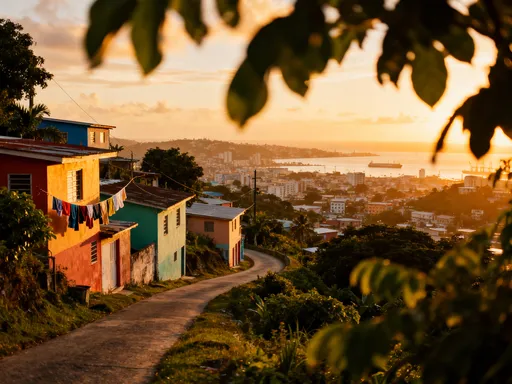
You Won’t Believe How Alive Victoria Feels at Golden Hour
Nestled on the edge of the Indian Ocean, Victoria, the charming capital of Seychelles, pulses with a rhythm all its own. It’s not just about palm-fringed beaches—this vibrant city blends Creole soul, colonial charm, and island energy into a sensory delight. From the moment the sun paints the painted houses in warm hues, you feel it: this is where culture meets coastline. Let me take you through its living streets, where every corner tells a story. More than a gateway to paradise, Victoria is a destination that breathes with authenticity, offering travelers a rare blend of intimacy and cultural richness. As golden hour spills across corrugated rooftops and coconut palms sway in the breeze, the city awakens in a quiet symphony of light, sound, and scent.
First Impressions: Stepping into a Tropical Capital
Arriving in Victoria is like stepping into a postcard that has come alive. The air carries the salty kiss of the Indian Ocean, mingled with the sweet aroma of frangipani and the faint sizzle of grilled fish from roadside grills. Unlike sprawling metropolises, Victoria is compact—small enough to explore on foot, yet rich in character and detail. As you leave the airport and approach the city center, the transition is seamless: lush green hills give way to pastel-colored buildings with tin roofs, narrow streets lined with banyan trees, and the occasional rooster strutting across the road. What strikes visitors most is not grandeur, but authenticity. There are no towering skyscrapers or neon signs—just a town that lives at its own pace, shaped by centuries of cultural exchange and island resilience.
The city’s unique energy comes from its layered heritage. African, Asian, and European influences weave through every aspect of daily life, from the melodic Creole language spoken on street corners to the mix of Indian saris, African prints, and European-style architecture. Street signs appear in both English and French, a quiet nod to the nation’s colonial past and linguistic diversity. Even the rhythm of conversation feels different—slower, warmer, more deliberate. Locals greet each other by name, pause to share news, and often invite strangers into their world with a smile. This isn’t a place built for speed; it’s designed for connection. And from the moment you arrive, you’re invited to slow down and feel the heartbeat of island life.
Victoria’s charm lies in its contradictions: it is urban yet deeply natural, historic yet vibrantly alive, small in size but vast in spirit. The city covers just over one square mile, making it one of the smallest national capitals in the world, yet it serves as the cultural, economic, and administrative heart of Seychelles. Despite its modest footprint, it never feels lacking. Instead, it feels intentional—every building, market stall, and tree placed with care. As the sun climbs higher, casting long shadows across cracked sidewalks and painted doors, the city begins to hum with activity. Schoolchildren in crisp uniforms walk in pairs, vendors arrange baskets of fruit, and fishermen return with the morning’s catch. This is not a staged performance for tourists; this is real life, unfolding in vivid color.
The Heartbeat of Town: Sir Selwyn Selwyn-Clarke Market
If Victoria has a soul, it resides in the Sir Selwyn Selwyn-Clarke Market. More than just a place to buy souvenirs or fresh produce, this bustling hub is the living pulse of the city. From early morning until mid-afternoon, the market buzzes with energy—vendors calling out prices, the clatter of wooden crates, the scent of nutmeg, vanilla, and ripe mangoes filling the air. Housed in a series of colonial-era buildings with high ceilings and wide arches, the market is divided into sections: one for fish, another for fruits and vegetables, and a third for crafts, spices, and local delicacies. It’s here that the true spirit of Seychellois culture comes alive, not in museum displays, but in the hands of those who live it every day.
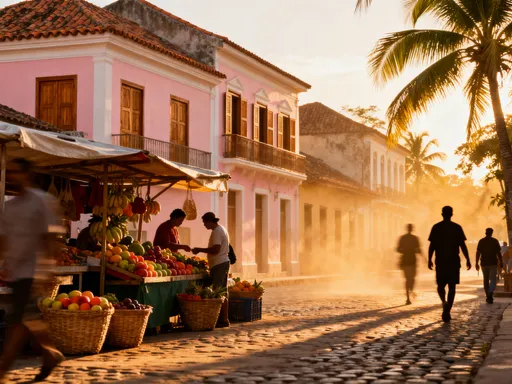
Walking through the market is a sensory immersion. Stalls overflow with coconuts, breadfruit, and tropical fruits like soursop and rose apple. Vendors proudly display bundles of fresh coriander, turmeric root, and cinnamon bark—ingredients that form the backbone of Creole cuisine. In the fish section, silvery tuna and red emperor lie on ice, their scales still glistening from the sea. Nearby, an elderly woman stirs a pot of *ladob*, a traditional dessert made from plantains or bananas cooked in coconut milk and vanilla. She offers a small spoonful to passing visitors, her eyes crinkling with warmth. This kind of generosity is common—locals don’t just sell; they share.
Beyond commerce, the market functions as a social space. Friends meet here to catch up, elders sit on benches exchanging stories, and children dart between stalls chasing chickens. It’s a place where generations connect, where recipes are passed down, and where traditions are preserved through daily practice. The market is also a testament to sustainability—most goods are locally grown or caught, minimizing waste and supporting small-scale farmers and fishers. Plastic bags are rare; instead, shoppers carry woven baskets or reusable cloth sacks. This isn’t a trend driven by marketing—it’s a way of life that has existed long before the term “eco-friendly” entered the global lexicon.
For visitors, the market offers more than just shopping—it offers understanding. By engaging with vendors, asking about ingredients, or simply observing the flow of daily commerce, travelers gain insight into the values of Seychellois society: community, resilience, and respect for nature. And while souvenirs like carved coconut shells or hand-stitched textiles make meaningful keepsakes, the real treasure is the human connection. The market doesn’t just feed the body; it nourishes the spirit.
Colonial Echoes and Cultural Layers
Victoria’s streets are an open-air museum of cultural fusion. Though small in size, the city carries the weight of history lightly, wearing its past with grace rather than grandiosity. One of the most recognizable landmarks is the Victoria Clock Tower, a near-replica of London’s Big Ben, gifted by the British in 1903. Standing at the center of town, it marks not just time, but the layers of influence that have shaped Seychelles. Around it, streets bear names like Albert, Queen, and Francis—echoes of colonial administration—but they are spoken with a Creole lilt, blending European roots with African and Asian inflections.
The architecture tells a similar story. Buildings painted in soft turquoise, coral pink, and sun-bleached yellow line the avenues, their wooden shutters and corrugated iron roofs reflecting both French colonial design and tropical adaptation. Many structures date back to the 19th century, yet they remain in active use—converted into shops, cafes, and government offices. Unlike in some former colonies where historic buildings fall into disrepair, Victoria’s heritage is not preserved behind glass; it is lived in, maintained, and respected. This continuity gives the city a sense of rootedness, a feeling that history is not something distant, but part of everyday life.
The blend of cultures is also evident in religious and community spaces. The Anglican Cathedral of St. Paul stands just blocks from a Hindu temple and a mosque, each serving a community that has found home in Seychelles. On Sundays, the sound of hymns drifts from the cathedral, while on Diwali, the market square glows with oil lamps. These coexisting traditions are not just tolerated—they are celebrated. National holidays honor Christian, Hindu, and Islamic observances, reflecting a society that values inclusivity and mutual respect. This harmony did not happen by accident; it is the result of generations choosing coexistence over division, dialogue over difference.
Even the language reflects this synthesis. Seychellois Creole, derived from French but enriched with African, Malagasy, and English elements, is the heart of communication. It is a language of rhythm and warmth, spoken quickly but never coldly. Children learn it at home, use it at school, and carry it into adulthood. While English and French are used in official settings, Creole is the language of the streets, of laughter, of shared identity. To walk through Victoria is to hear this linguistic tapestry unfold in real time—a reminder that culture is not static, but constantly evolving through daily interaction.
Urban Nature: Parks, Gardens, and the Botanical Soul
In a world where cities often push nature aside, Victoria embraces it. Green spaces are not afterthoughts—they are central to the city’s identity. The National Botanical Gardens, established in the late 20th century, is a lush sanctuary just minutes from the city center. Here, giant takamaka trees stretch toward the sky, their broad canopies providing shade for wandering visitors. Ferns unfurl in the humidity, and bright hibiscus blooms dot the pathways. But the true marvel is the coco de mer—the legendary double coconut native only to Seychelles. Its massive, curved seed, resembling a human pelvis, has fascinated explorers for centuries. In the gardens, these trees grow in protected groves, their presence a symbol of the archipelago’s unique biodiversity.
The gardens serve multiple purposes: they are a haven for relaxation, a center for conservation, and a source of national pride. Local families picnic under the trees, students sketch plants for school projects, and tourists wander with cameras in hand. But beyond beauty, the space plays a vital role in preserving endangered species and educating the public about ecological stewardship. Staff members lead guided tours explaining the importance of native flora, the threats posed by invasive species, and the efforts to restore natural habitats across the islands. This blend of education and enjoyment makes the gardens more than a park—they are a living classroom.
Other green spaces dot the city, from small neighborhood plazas to coastal walkways lined with palm trees. Even in densely populated areas, residents find ways to incorporate nature—balconies overflow with potted herbs, and courtyards host banana trees and flowering vines. This integration of urban and natural environments reflects a deep cultural value: that people are not separate from nature, but part of it. In a time of climate uncertainty, Victoria’s model offers quiet inspiration—a city that doesn’t conquer nature, but coexists with it.
These spaces also contribute to well-being. Studies have shown that access to green areas reduces stress, improves mental health, and fosters community interaction. In Victoria, where life moves at a human pace, parks and gardens provide moments of stillness amid daily rhythms. They are places to breathe, reflect, and reconnect—not just with nature, but with oneself. For travelers, a walk through the botanical gardens is not just a sightseeing stop; it’s a reset, a chance to slow down and absorb the island’s quiet wisdom.
Street Life and Local Rhythms
To know Victoria, you must wander beyond the guidebooks. The true essence of the city reveals itself in unplanned moments: a child balancing a book on her head as she walks to school, a fisherman mending his net with practiced fingers, the distant strum of a guitar from an open window. These are the quiet rhythms that define daily life—a pace governed not by clocks, but by sun, tide, and tradition. In the early morning, women sweep their doorsteps with brooms made of coconut fronds. By midday, the heat slows movement, and shops close briefly for rest. As the sun begins to dip, life stirs again—families gather on porches, dogs stretch in the fading light, and the scent of cooking drifts from open kitchens.
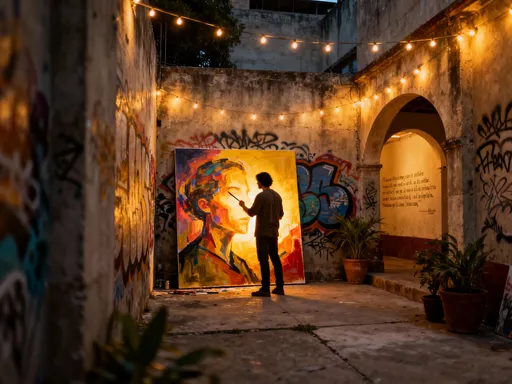
Street art adds another layer to the city’s character. Murals painted on building walls depict scenes of island life—women in headwraps carrying baskets, dhoni boats sailing at sunset, dancers in traditional costume. These are not commissioned works for tourism; many are created by local artists expressing pride in their heritage. Some walls tell stories of resilience, others celebrate joy. Together, they transform ordinary streets into open-air galleries, where art is not confined to museums but lives in the public sphere.
One of the most striking aspects of Victoria’s street life is its lack of pretense. There are no staged performances for tourists, no forced interactions. What you see is what is real. A man repairs a bicycle with simple tools on the sidewalk. A group of elders plays dominoes under a banyan tree. A vendor sells *boulette de coco*—coconut dumplings—from a wooden cart. These moments are not curated; they are lived. And for the observant traveler, they offer a deeper kind of souvenir: memory, not merchandise.
This authenticity invites mindfulness. To walk through Victoria is to practice presence—to notice the way light hits a painted door, the sound of Creole spoken in laughter, the texture of a weathered wall. It’s a city that rewards slowness, that asks you to look closely, listen deeply, and feel fully. In a world of rushed itineraries and checklist tourism, Victoria offers an alternative: travel not as consumption, but as connection.
Getting Around: Walkability and Island Logistics
One of Victoria’s greatest strengths is its walkability. The city center is compact, with most major attractions—market, clock tower, cathedral, botanical gardens—within a 20-minute stroll of each other. Sidewalks may be uneven in places, and shade is not always guaranteed, but walking is not just practical; it’s the best way to experience the city. On foot, you notice details you’d miss from a car: a mural tucked between buildings, the scent of jasmine around a corner, a friendly wave from a shopkeeper. There’s no need for rush—distances are short, and the pace of life encourages lingering.
For longer trips or visits to other parts of Mahé, the main island, public buses provide an affordable and reliable option. Operated by the Seychelles Public Transport Corporation, buses run regularly from the central station near the market. Routes connect Victoria to coastal villages, beaches, and hiking trailheads. While schedules can be flexible and English signage limited, drivers are often helpful, and fellow passengers willing to guide newcomers. Riding the bus is not just transportation—it’s another form of cultural immersion, a chance to sit beside locals, hear conversations, and see how islanders move through their world.
Many visitors choose to rent scooters or small cars for greater flexibility. Scooters, in particular, are popular for their ease and affordability. However, driving in Seychelles requires adjustment: roads are narrow, winding, and often unpaved in rural areas. There are no traffic lights in Victoria—only roundabouts and stop signs—and drivers tend to be cautious rather than aggressive. Speed limits are low, and the terrain demands attention. For those unaccustomed to island driving, it’s wise to start slowly, allow extra time, and embrace the journey as part of the experience.
Regardless of mode, the key to navigating Victoria is patience. Things operate on “island time”—buses may be late, shops close unexpectedly, and directions may require a few attempts to understand. But this is not inefficiency; it’s a different relationship with time. In a society where relationships matter more than schedules, flexibility is not a flaw, but a virtue. Travelers who adapt to this rhythm often find it liberating—a reminder that life doesn’t always need to be optimized, only lived.
Why Victoria Stays With You
Victoria does not impress with scale or spectacle. It has no skyscrapers, no luxury malls, no grand monuments. And yet, for those who take the time to know it, the city leaves a lasting impression. It stays with you in the quiet moments: the way golden light catches the spire of the cathedral at dusk, the sound of waves just beyond the rooftops, the warmth of a stranger’s smile. It stays in the taste of fresh coconut water sipped from the shell, the rhythm of Creole spoken in laughter, the feeling of walking barefoot on cool stone in a shaded courtyard.
What makes Victoria unforgettable is its humanity. It is a place that feels lived-in, loved, and deeply rooted. It does not perform for visitors; it simply is. And in that authenticity, there is a rare kind of beauty—one that doesn’t shout, but whispers. It reminds us that travel is not just about seeing new places, but about feeling them, understanding them, and allowing them to change us.
In a world of increasingly homogenized destinations, Victoria stands apart. It is not trying to be anything other than itself—a small, vibrant capital where culture, nature, and community intertwine. It invites travelers not to rush through, but to settle in, to listen, to participate. It redefines what an island city can be—not a stopover, but a destination of depth and soul. And as the sun sets over the Indian Ocean, painting the painted houses in hues of amber and rose, you realize: this is not just a place on a map. It is a feeling. And it will stay with you long after you’ve left its shores.