Lost in the Cobblestones: How Antigua Stole My Sense of Space
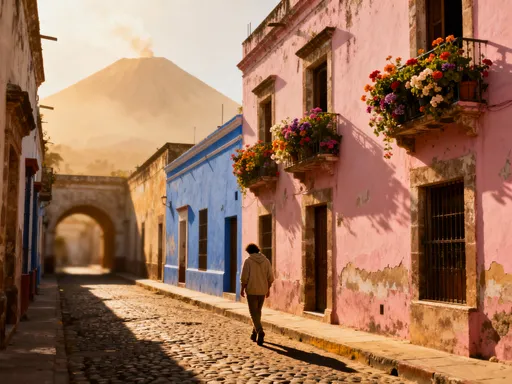
Walking through Antigua, Guatemala, feels like stepping into a living painting where every corner bends time and space. The narrow cobblestone streets pull you deeper, not just into the city, but into a rhythm older than clocks. Colonial architecture, vibrant markets, and the quiet hum of daily life blend seamlessly, reshaping how you experience urban space. This isn’t just sightseeing—it’s feeling a city breathe. You don’t observe Antigua—you become part of it. In this intimate dance between place and presence, the boundaries between observer and participant dissolve. Here, every footstep echoes with history, every doorway hints at hidden stories, and every turn invites a deeper connection to the pulse of a community shaped by centuries of quiet resilience.
First Impressions: Entering a City That Feels Like a Secret
Antigua does not announce itself with fanfare. There is no grand entrance, no sweeping boulevard that declares, “You have arrived.” Instead, the transition is subtle—a soft shift from the open highway to a winding road framed by volcanic peaks, then gradually into narrow streets paved with smooth, time-worn stones. The change in scale is immediate. Doorways are lower, sidewalks barely wide enough for two to walk side by side, and the pace of movement slows before you even realize it. Unlike modern cities engineered for efficiency and speed, Antigua resists haste. Cars are sparse, their presence muted by preservation laws that prioritize pedestrians. The dominant sounds are not engines, but footsteps, distant laughter, and the occasional chime of a church bell marking the hour.
This deliberate slowness is not accidental—it is embedded in the city’s very structure. Founded in the early 16th century and rebuilt after earthquakes, Antigua’s urban layout reflects a colonial vision that, unintentionally, created a deeply human-centered environment. The streets are designed for walking, not for traffic flow. Buildings lean gently toward one another, forming a canopy of color and shadow that shelters passersby from sun and rain. This intimacy is felt physically: the air is cooler, voices carry differently, and eye contact becomes inevitable. There is a quiet sense of being seen, not as a tourist, but as a temporary resident in a world that operates on its own internal rhythm.
Psychologically, this shift in scale alters perception. In larger cities, people often feel anonymous, dwarfed by skyscrapers and overwhelmed by constant motion. In Antigua, the opposite occurs. The environment feels contained, manageable, almost protective. It is a place where you can get lost—not in the disorienting way of a sprawling metropolis, but in the gentle, inviting way of a story unfolding. Each alleyway feels like a personal discovery, each plaza a quiet invitation to pause. This is not urban chaos; it is urban harmony, carefully preserved and deeply felt.
The Architecture of Intimacy: How Colonial Design Shapes Movement
The Spanish colonial grid that defines Antigua is more than a historical artifact—it is a living blueprint for how space can shape human behavior. Laid out in a near-perfect grid pattern, the city’s streets intersect at right angles, creating a sense of order and predictability. Yet within this structure, there is warmth. The uniformity of pastel-colored buildings—soft yellows, pinks, and blues—with their red-tiled roofs and wrought-iron grilles, creates visual continuity. Flower-draped balconies overflow with bougainvillea, adding bursts of color that change with the light. This aesthetic cohesion is not merely decorative; it contributes to a sense of calm and coherence, reducing the visual noise that often overwhelms city dwellers.
More importantly, the proportions of Antigua’s spaces are calibrated to the human body. Plazas are large enough to host gatherings, yet small enough to feel personal. The central Parque Central, for example, is surrounded by benches, shaded by trees, and anchored by a fountain. It is a space designed for lingering, not just passing through. The height of buildings rarely exceeds two or three stories, ensuring that the sky remains visible and the sense of enclosure never becomes oppressive. Arched passageways, such as those leading into former convents or private homes, create thresholds that invite curiosity and slow movement. These architectural features are not relics—they are active participants in shaping how people move, gather, and connect.
Church courtyards, once places of contemplation, now serve as quiet retreats for visitors and locals alike. The ruins of the Cathedral of San José, with its crumbling arches and open-air nave, stand as a testament to both destruction and endurance. Yet even in ruin, the space retains its emotional power. Visitors speak in hushed tones, not out of obligation, but because the atmosphere demands it. The scale, the light, the texture of the stone—all work together to create a sense of reverence. This is not architecture for spectacle, but for presence. It asks you to be here, now, fully aware of your surroundings.
The Rhythm of Daily Life: Markets, Courtyards, and Shared Moments
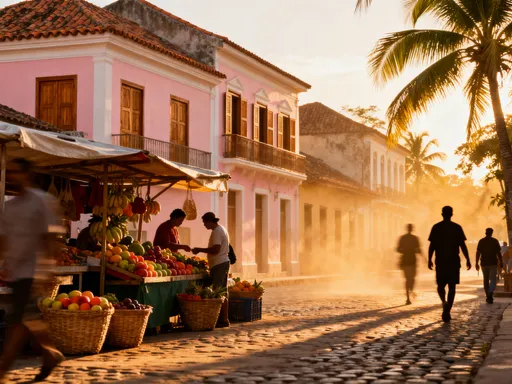
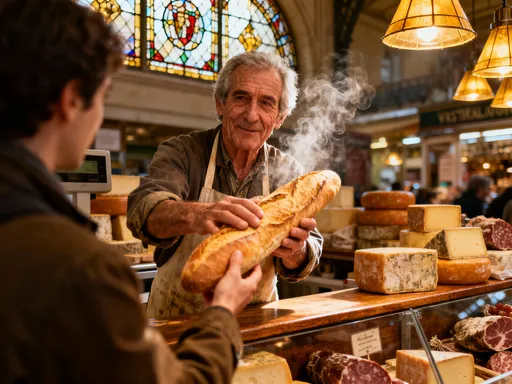
Urban space is not static; it is animated by the people who inhabit it. In Antigua, daily life spills into the streets in ways that feel both ordinary and profound. The Mercado de Artesanías, bustling each morning, is more than a tourist destination—it is a hub of local commerce and culture. Women in traditional huipiles carry woven baskets filled with fresh produce, while vendors call out prices for handmade textiles, spices, and pottery. The air is thick with the scent of roasted corn, cacao, and wood smoke. Children dart between stalls, and elders sit on low stools, watching the world go by. This is not a performance for visitors; it is the authentic pulse of the city.
Meals are often shared in shaded patios, where families gather around simple wooden tables. The act of eating becomes communal, extended by conversation and the slow passage of time. In the late afternoon, neighbors meet by the fountains in Parque Central, exchanging news and laughter. These small, repeated interactions—buying bread, greeting a shopkeeper, sharing a bench—are the threads that weave the social fabric. They transform public spaces from mere locations into lived experiences.
The sensory richness of Antigua deepens this sense of belonging. Sunlight warms the stone walls in the morning, then retreats into cool shadows by midday. The sound of church bells marks the hours, not as a demand for punctuality, but as a gentle reminder of time’s passage. Even the texture of the cobblestones underfoot—uneven, smooth in places, cool to the touch—grounds you in the physical world. These details are not incidental; they are essential to how the city feels. They create a multi-sensory environment that engages the body and mind, fostering a deeper connection to place.
For visitors, especially women between 30 and 55 who often balance family, work, and personal well-being, Antigua offers a rare opportunity to slow down and reconnect. The city does not demand productivity. It invites presence. In a world where schedules dominate and screens distract, this rhythm of simple, meaningful interaction can feel revolutionary. It reminds us that community is not built in grand gestures, but in the quiet moments of shared existence.
Hidden Layers: Courtyards, Rooftops, and Vertical Living
Beneath the surface of Antigua’s streets lies another dimension—vertical and inward. Many homes, hidden behind unassuming façades, open into lush inner courtyards. These private oases, often centered around a fountain or a flowering tree, are invisible from the street. They are spaces of retreat, reflection, and family life. In a city where outdoor space is limited, these courtyards become extensions of the home, offering light, air, and a sense of sanctuary. They reflect a cultural value: privacy within proximity, solitude within community.
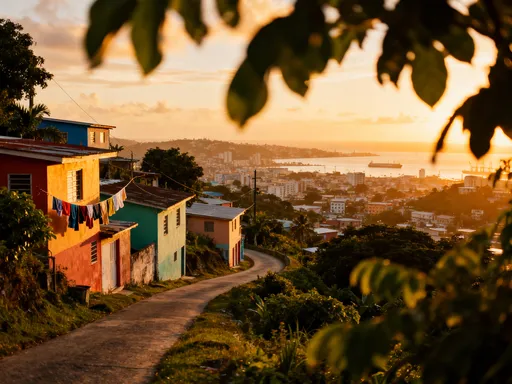
Rooftop terraces add another layer. Once used for drying clothes or storing goods, they are now cherished vantage points. From these elevated spaces, the city reveals itself in fragments—volcanoes rising in the distance, church spires piercing the skyline, laundry fluttering in the breeze. At sunrise or sunset, these terraces become places of quiet contemplation. A mother might sip her morning coffee here, watching the city wake. A grandmother might sit in the evening, recalling stories passed down through generations. These spaces are not grand or luxurious, but they are deeply personal.
This verticality allows for a layered existence. Ground floors often house workshops, shops, or family businesses—spaces of engagement with the public. Upper levels provide rest and retreat. This architectural duality supports a balanced life: connected yet contained, active yet reflective. For modern travelers, especially those seeking respite from the demands of urban life, this model offers inspiration. It suggests that well-being is not found in escape, but in thoughtful design—spaces that honor both community and individuality.
Walking as a Practice: How Movement Changes Perception
In Antigua, walking is not a means to an end—it is the experience itself. Without the dominance of cars, pedestrians reclaim the streets. Movement becomes mindful. Each step is felt—the slight give of the cobblestones, the rhythm of breath matching pace, the shifting play of light and shadow. Routes are not chosen for efficiency, but for pleasure. A walk from La Merced Church to the Santa Catalina Arch, for example, is not just a transfer from point A to point B. It is a journey through color, texture, and memory.
La Merced, with its ornate yellow façade and intricate stone carvings, stands as a monument to resilience. Damaged by earthquakes and rebuilt, it embodies the city’s spirit. As you leave its courtyard, the street narrows, then opens into a small plaza where children play and vendors sell fresh fruit. Around the corner, the Santa Catalina Arch—once a passageway for cloistered nuns—now serves as a beloved landmark. Passing beneath it feels symbolic, a threshold between past and present. Each turn reveals a new perspective, not just visually, but emotionally.
This kind of walking aligns with principles of mindful travel—a growing movement that emphasizes presence, awareness, and connection. In a world where tourism often means rushing from one attraction to the next, Antigua invites a different approach. It teaches that the journey matters more than the destination. Studies in environmental psychology support this: walking through richly textured environments reduces stress, improves mood, and enhances cognitive function. In Antigua, these benefits are not theoretical—they are felt in the body, in the breath, in the quiet joy of simply being.
Challenges of Preservation: Balancing History and Modern Needs
While Antigua’s charm is undeniable, its preservation comes with real challenges. Tourism brings economic benefits—supporting local artisans, restaurants, and guesthouses—but it also brings pressure. Popular plazas can become crowded, especially during peak seasons. Rental prices have risen, making it harder for long-time residents to remain in the city center. Some families have moved to the outskirts, where housing is more affordable but less connected to the cultural heart of Antigua.
Preservation laws, while essential for maintaining the city’s historic character, can also limit modernization. Homeowners may face restrictions on renovations, making it difficult to update plumbing, electricity, or accessibility features. This creates a tension between authenticity and livability. How does a city honor its past without becoming a museum frozen in time? How can it welcome visitors without displacing its people?
These questions are not ignored. Community-led initiatives have emerged to address them. Local cooperatives support traditional weaving and pottery, ensuring that cultural practices remain economically viable. Sustainable tourism programs encourage respectful visitor behavior, such as staying in family-run guesthouses, shopping at local markets, and learning basic Spanish phrases to connect with residents. Educational campaigns highlight the importance of preserving not just buildings, but the living culture within them.
The goal is not to stop change, but to guide it thoughtfully. Antigua’s survival depends on balance—between tourism and tradition, preservation and progress, visibility and privacy. The city’s residents are not passive guardians of history; they are active shapers of its future. Their efforts remind us that heritage is not a static display, but a dynamic process of care and adaptation.
Why Antigua Matters: A Model for Human-Scale Cities
Antigua is more than a beautiful destination—it is a lesson in what cities can be. In an era of sprawling metropolises, where concrete towers block the sky and traffic drowns out conversation, Antigua stands as a quiet counterpoint. It proves that urban life can be compact, walkable, and emotionally rich. It shows that beauty and function are not mutually exclusive, that history and modernity can coexist, and that community can thrive in density.
The city’s greatest gift is its invitation to presence. It does not dazzle with spectacle; it disarms with intimacy. It asks travelers to slow down, to notice, to listen. For women who often carry the emotional labor of family and home, this invitation is particularly powerful. It offers a space to breathe, to reconnect with oneself, and to remember that well-being is not found in doing more, but in being here.
As urban planners around the world seek solutions to congestion, isolation, and environmental strain, Antigua offers a timeless model: design for people, not machines. Prioritize walkability. Honor local culture. Protect green and shared spaces. Let architecture serve both beauty and belonging. These are not radical ideas—they are ancient ones, rediscovered in the cobblestones of a small Guatemalan city.
To visit Antigua is not just to see another place—it is to feel a different way of living. It is to understand that space is not just measured in meters, but in moments of connection, in the warmth of sunlight on stone, in the sound of a child’s laugh echoing through an alley. It is to realize that the most meaningful journeys are not across continents, but into the depth of a single, well-lived place. Let this city remind you: the world does not need more speed. It needs more presence. And sometimes, all it takes is a single step on a quiet street to remember how to walk, how to see, how to be.